Plastic Is Poison
Rethink Your Plastic Footprint
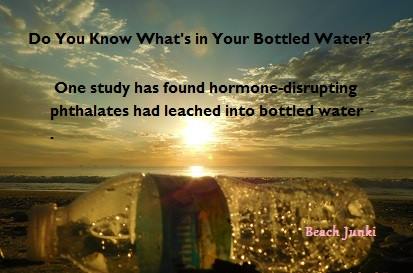
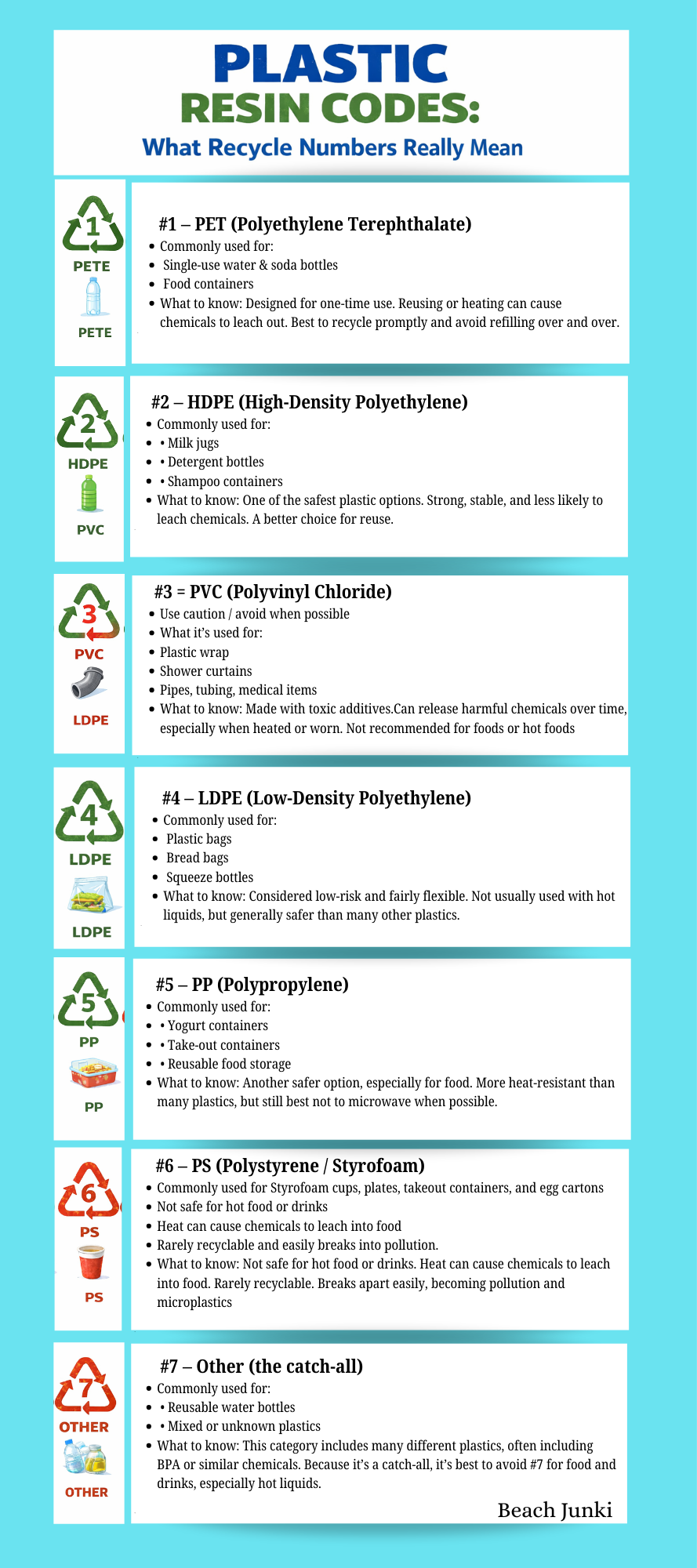
As someone who spends countless hours on the beach, I see firsthand how plastic pollution impacts our environment. But what truly drives me to speak out is knowing that plastic doesn’t just harm our oceans — it also affects our health. Over time, plastic breaks down into tiny pieces called microplastics, which have been found in our water, food, and even our bodies. Many plastics also contain chemicals that can leach out as they heat, wear down, or are reused. Helping raise awareness about these hidden impacts feels just as important to me as picking up trash on the shoreline.
Small choices matter. By learning what’s in the plastics we use every day and choosing safer alternatives when we can, we help protect our health, our oceans, and future generations.
Understanding Resin Identification Codes
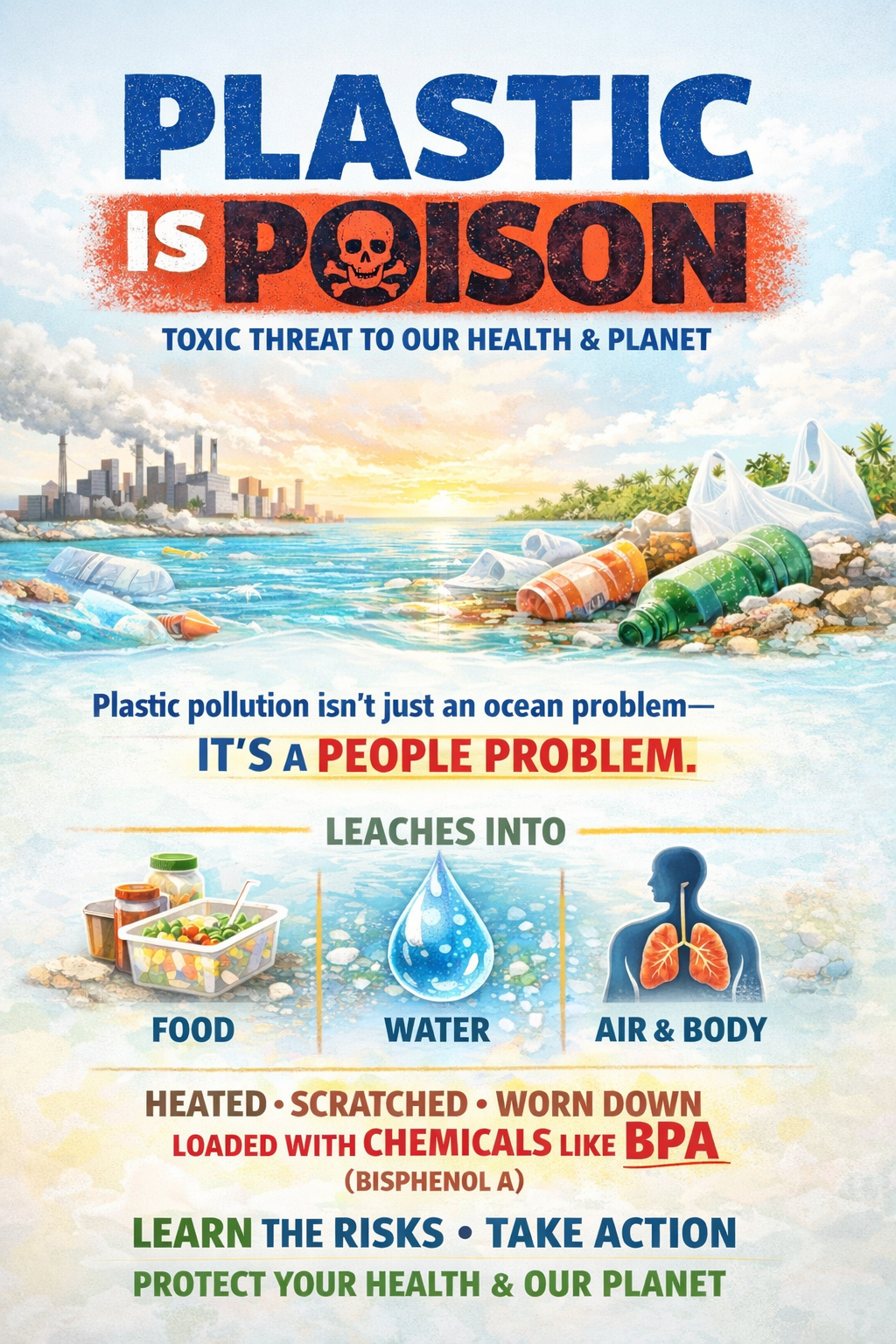
The numbers on the bottom of plastic
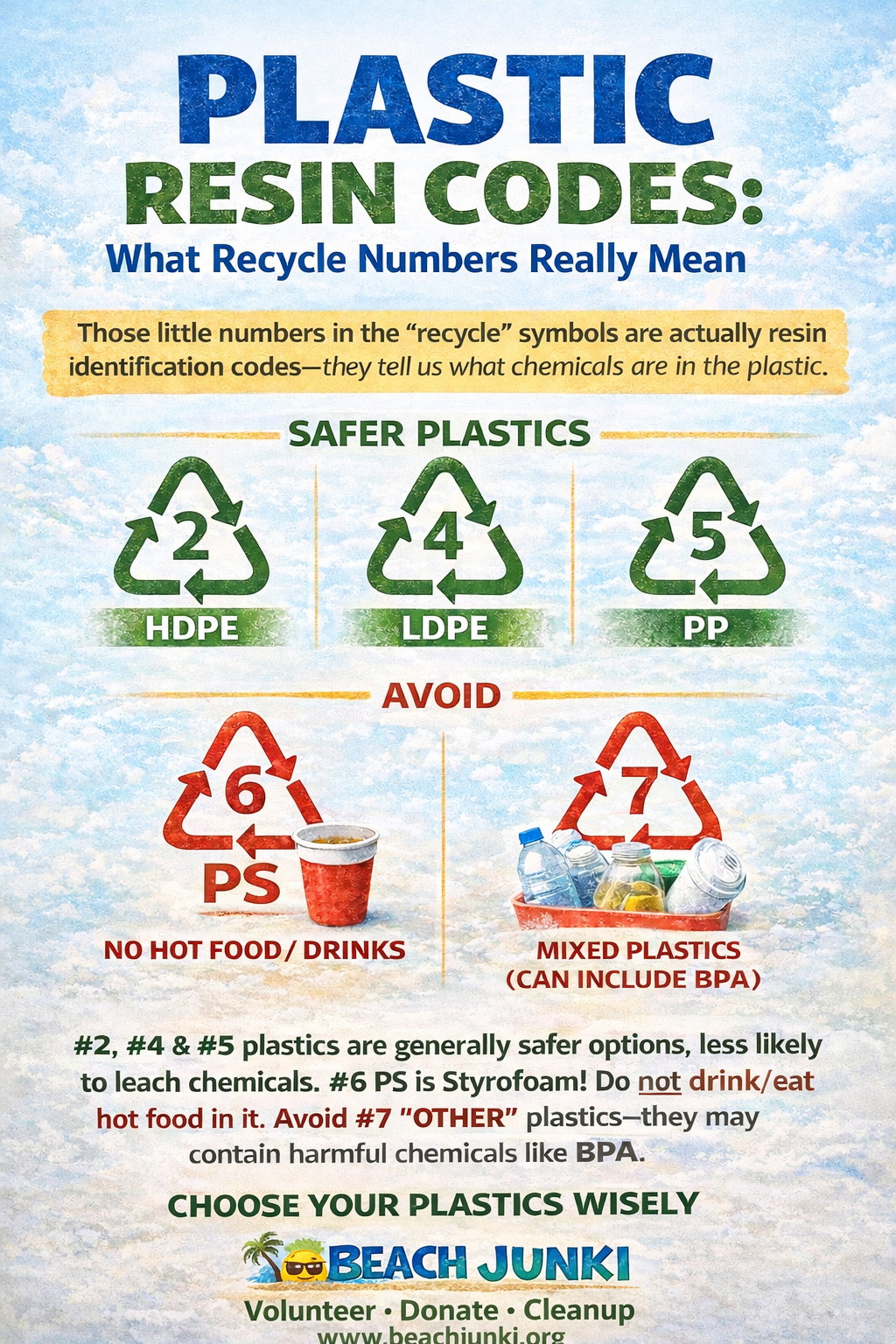
Those little numbers inside the recycling symbol aren’t about how recyclable something is — they’re resin identification codes. They tell us what type of plastic the item is made from, and that matters because different plastics are made with different chemicals and behave differently when heated, scratched, or reused.
What is BPA?
BPA (bisphenol A) is a chemical used to make certain plastics and resins. It’s historically been used in items like polycarbonate plastics (hard, clear plastics) and epoxy resins that can coat some metal food cans and lids.
What you can do right now
You don’t have to be perfect — small changes add up.
At home
-
Don’t microwave or heat food in plastic (even “microwave-safe”).
-
Choose glass, stainless steel, or ceramic for hot foods and drinks.
-
Swap out old, scratched plastic containers.
-
Reduce canned foods when possible (some can linings can involve BPA-type resins).
Why people worry about BPA and other plastic chemicals
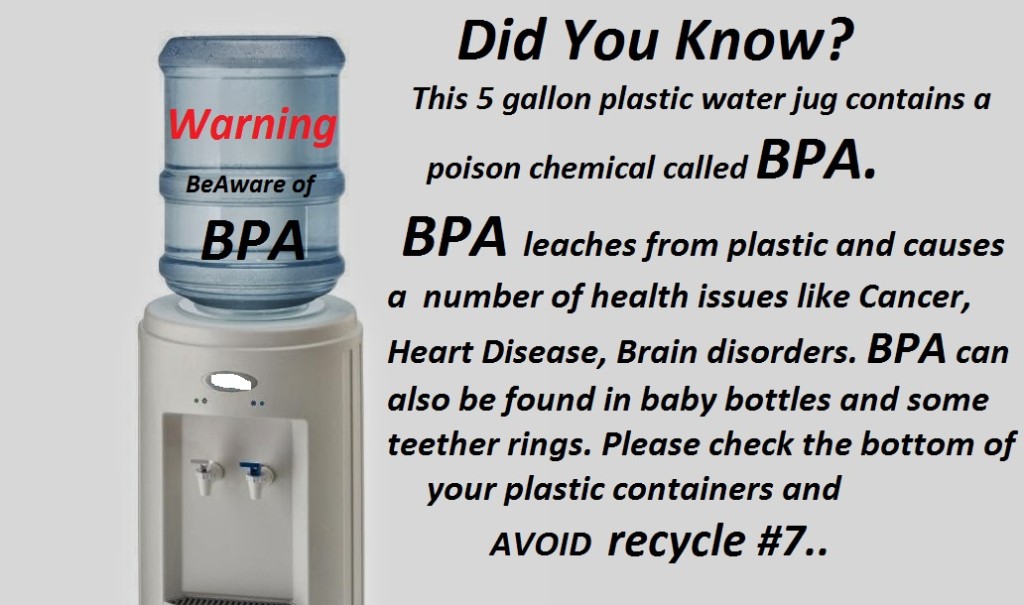
A major concern is that BPA and other chemicals found in plastics may act as endocrine disruptors — meaning they can interfere with the body’s hormone system. Hormones help regulate growth, development, metabolism, mood, and reproduction.
And BPA isn’t the only one. Other plastic-associated chemicals (like certain phthalates and flame retardants) are also being studied for potential health impacts.